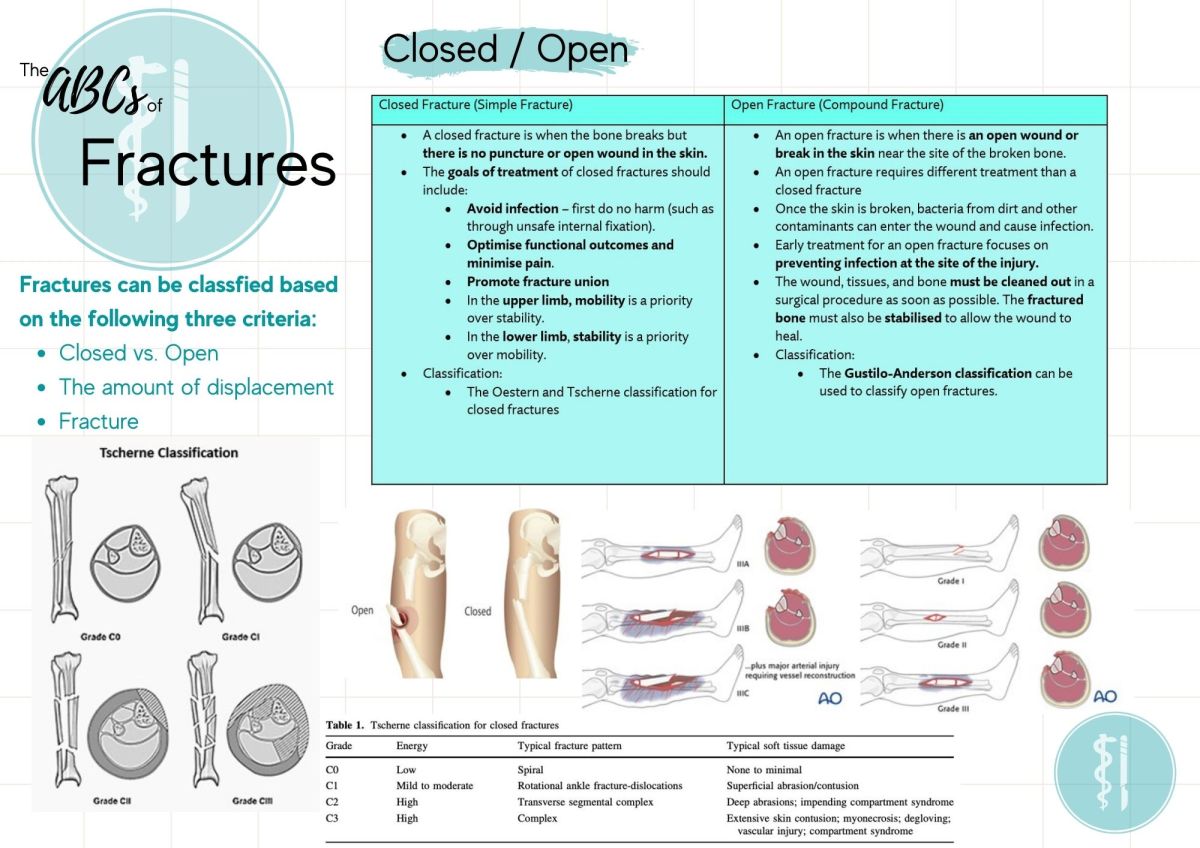
A fracture is a break in the continuity of a bone. It can happen in any bone and ranges from small partial cracks to complete breaks.
Categories
ABCs of: Fractures
 Surgical Interest Group of Monash University Malaysia
A fracture is a break in the continuity of a bone. It can happen in any bone and ranges from small partial cracks to complete breaks.
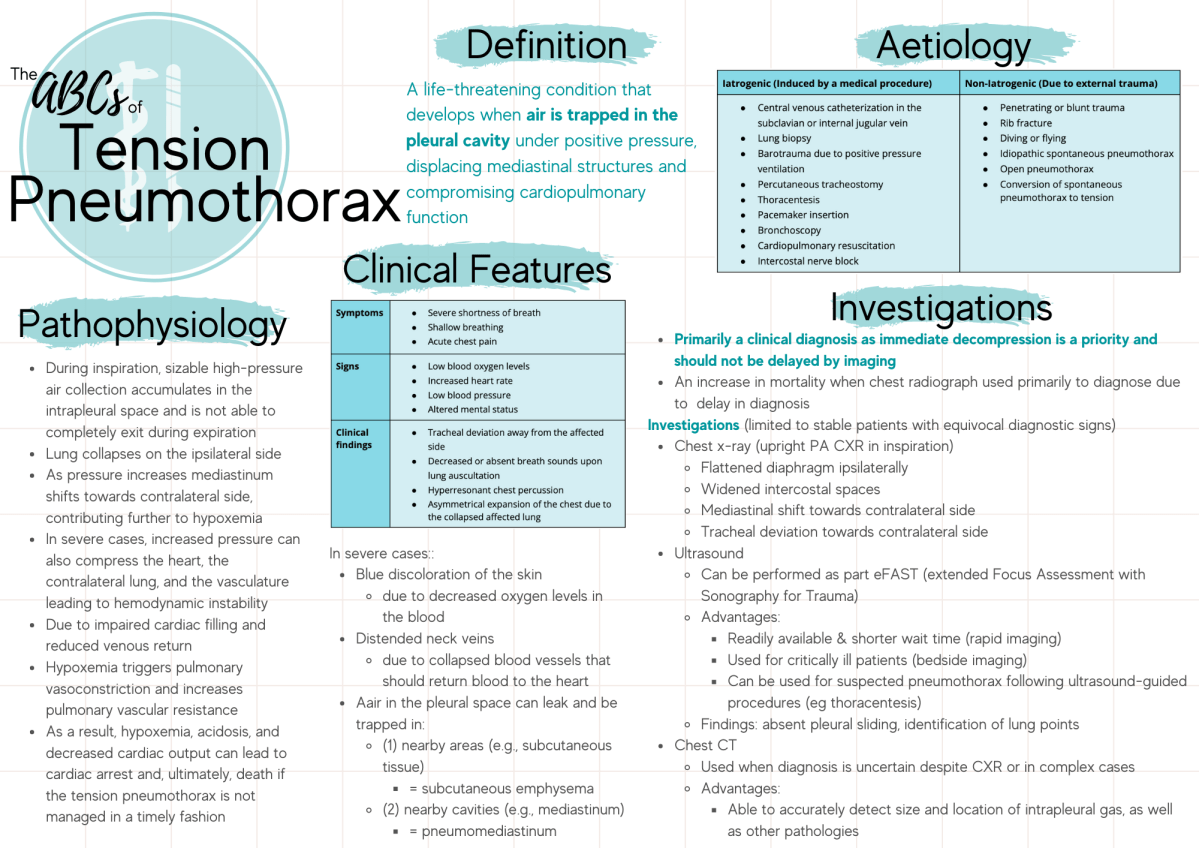
In tension pneumothorax, air accumulates between the chest wall and the lung. This increases pressure in the chest and reduces the amount of blood returned to the heart.
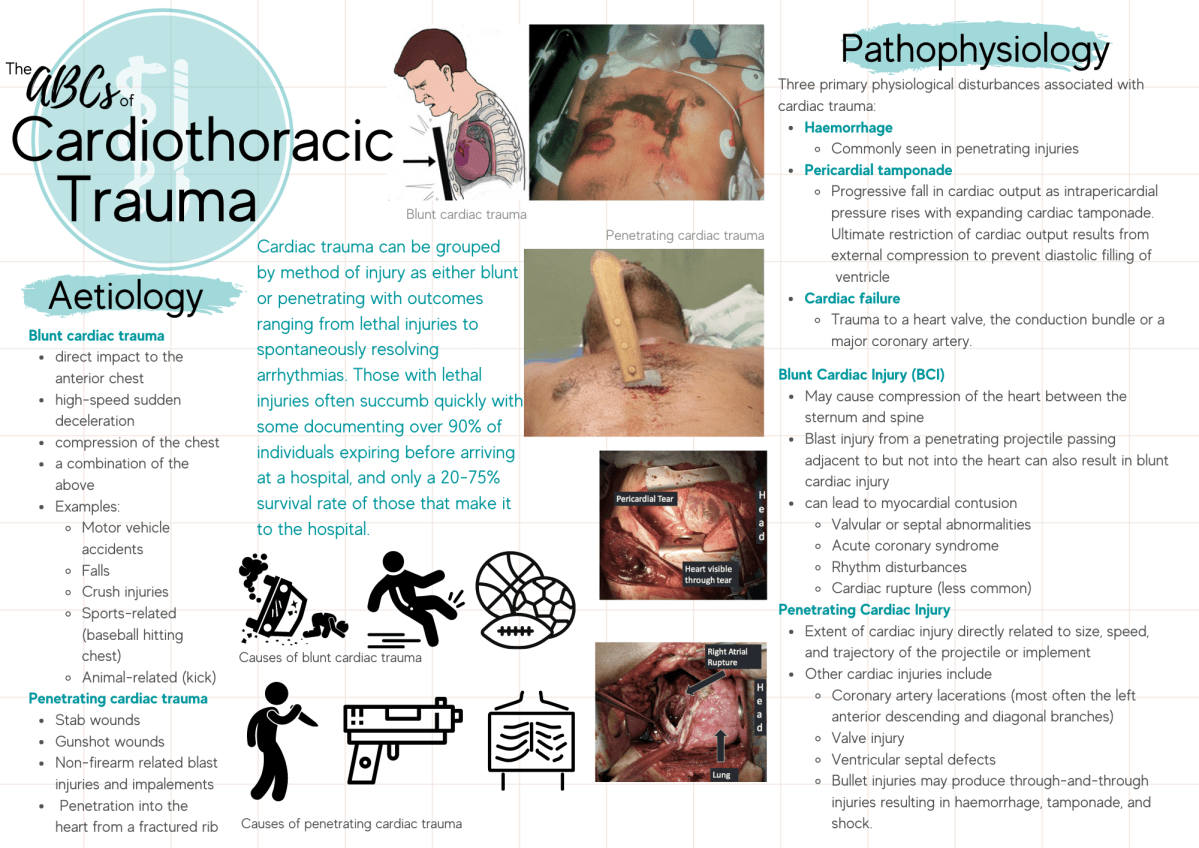
The main mechanisms of injury in cardiothoracic trauma are blunt and penetrating trauma.
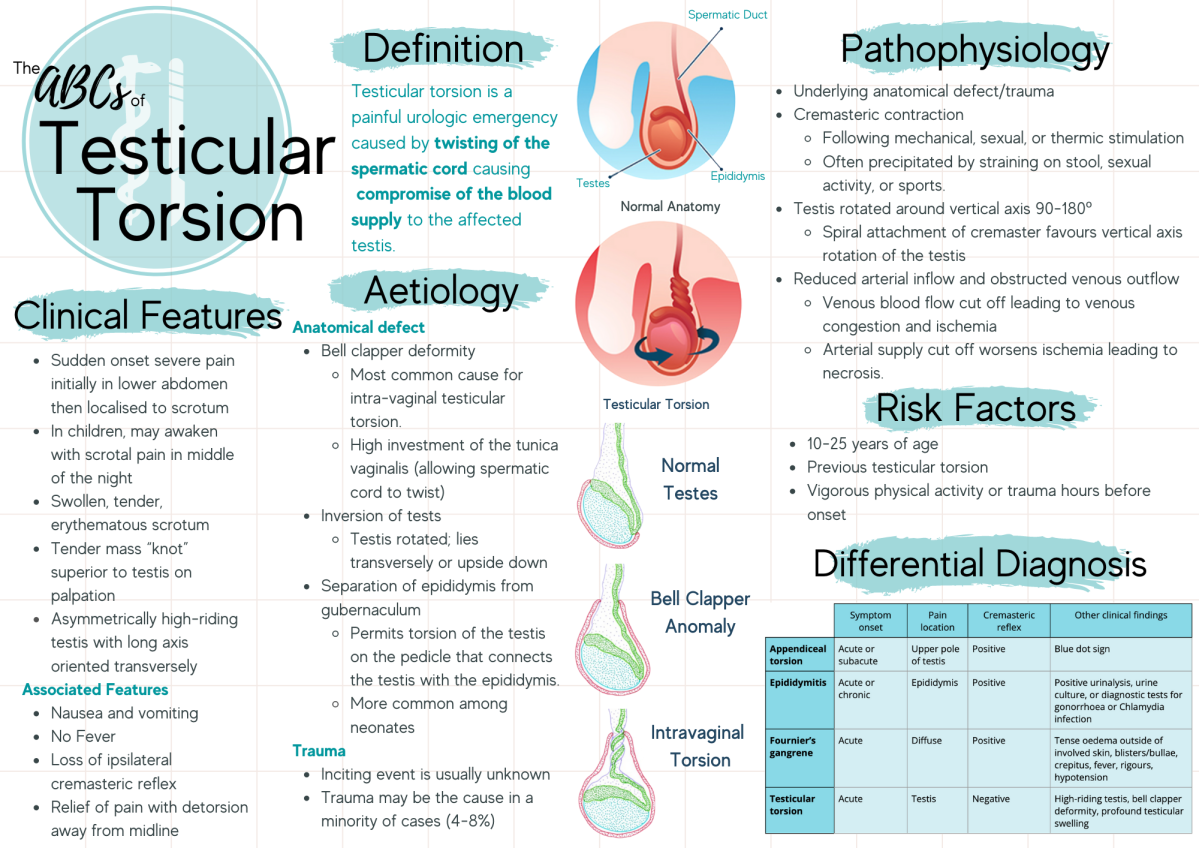
Testicular torsion is seen when a testicle rotates, twisting the spermatic cord that carries blood to the scrotum. The decreased blood flow causes acute and often severe pain and swelling.
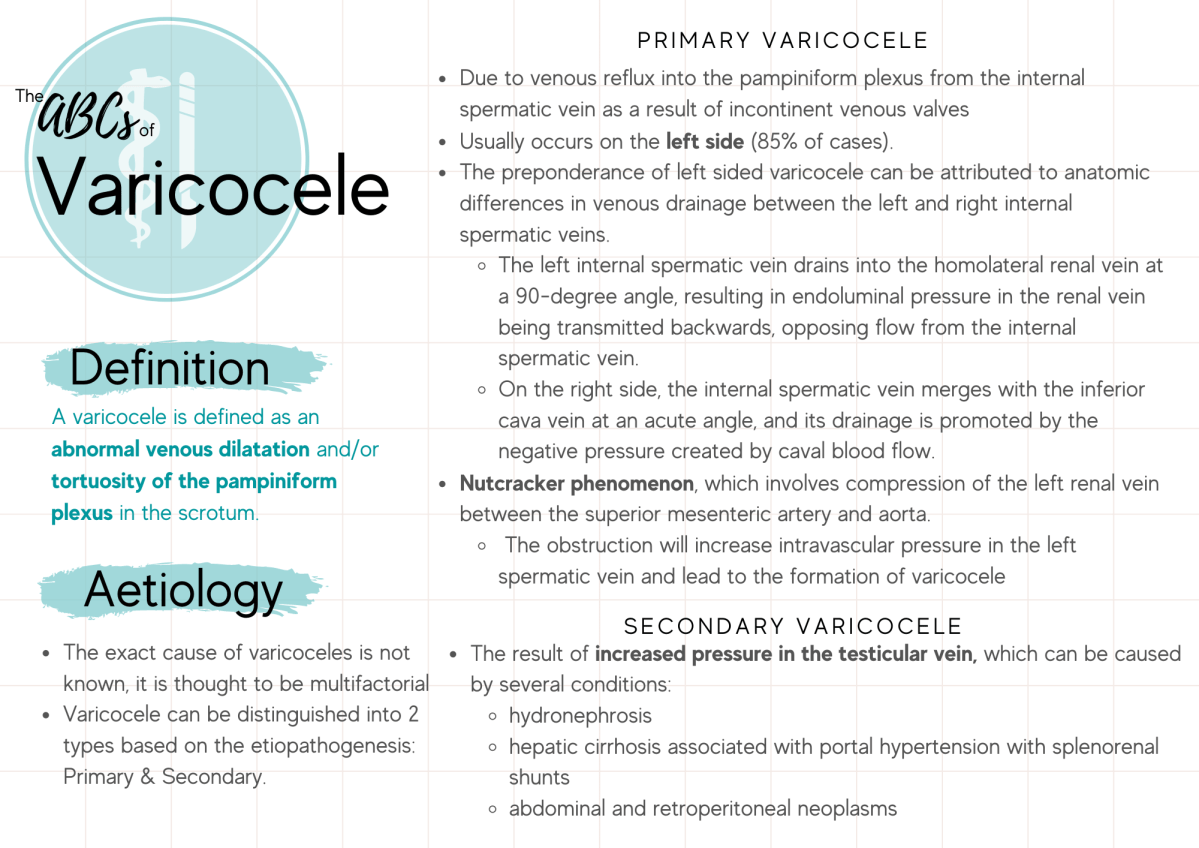
A varicocele is an enlargement of the veins within the scrotum. It is not uncommon and usually forms during puberty.

A hydrocele is a fluid collection within the tunica vaginalis of the scrotum or along the spermatic cord. It is usually painless and harmless and it resolves on its own.

It is defined as the inflammation of the bile duct due to bacterial infection ascending
from the duodenum.
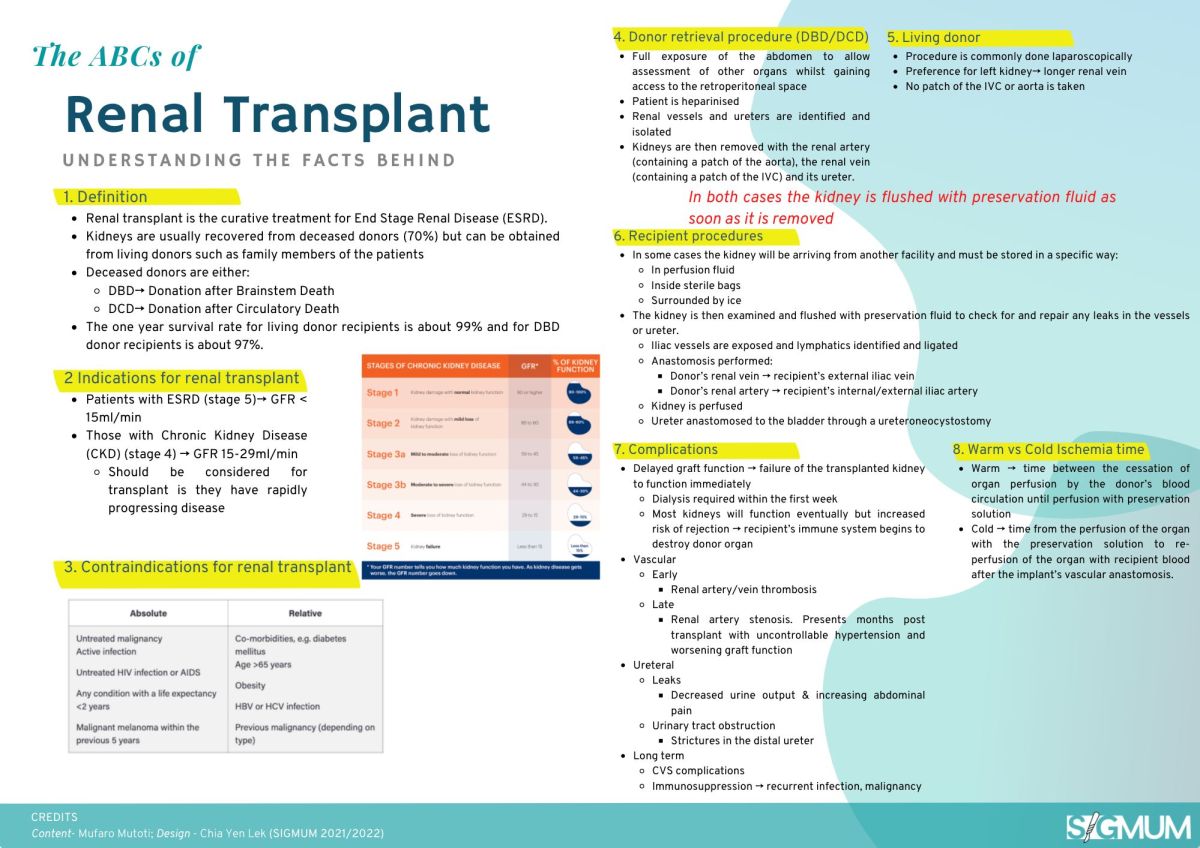
Renal transplant is the curative treatment for End Stage Renal Disease (ESRD).
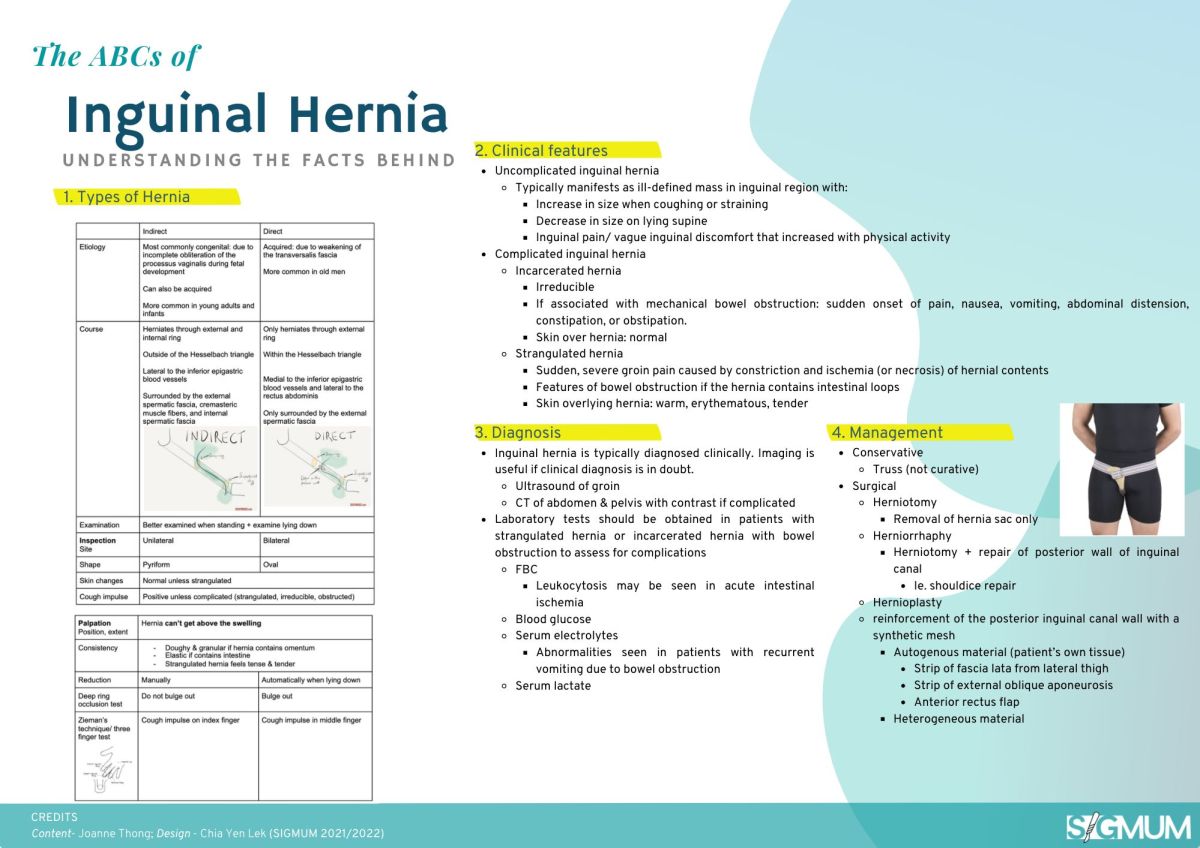
An inguinal hernia is defined as the protrusion of pelvic or abdominal contents through the inguinal canal and emerging out of the external inguinal ring; presenting as a visible or palpable bulge. Surgery is the mainstay of management.
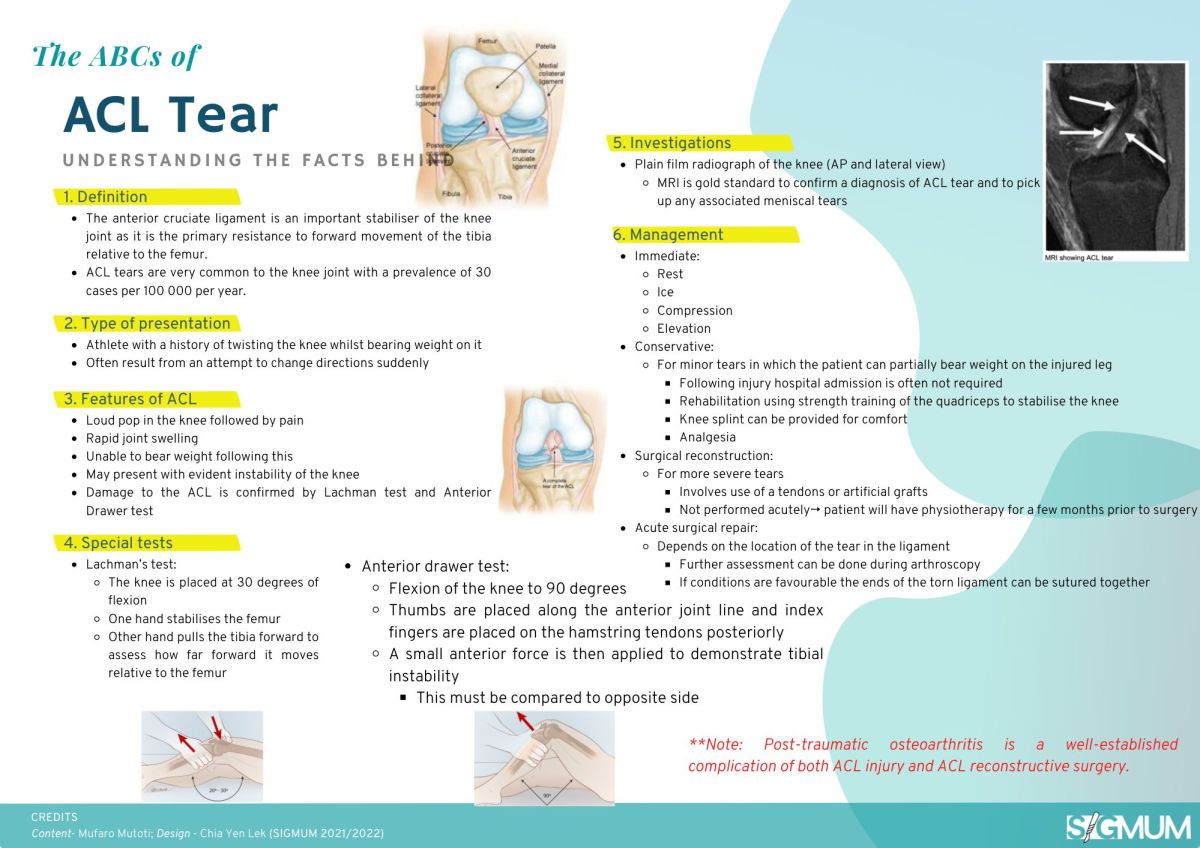
The anterior cruciate ligament is an important stabiliser of the knee joint as it is the primary resistance to forward movement of the tibia relative to the femur. ACL tears are very common to the knee joint with a prevalence of 30 cases per 100 000 per year.

 Surgical Interest Group of Monash University Malaysia